
AI and automation
From AI Pilot to Production in 2026: Why Enterprise AI Projects Get Stuck
In short
Enterprise AI projects usually stall between pilot and production for six reasons: data that is not ready, integration with live systems, agent identity and permissions, unclear approvals and accountability, operating costs nobody measures, and no owner after go-live. Working through those for one process before expanding is what turns a successful pilot into a dependable business process.
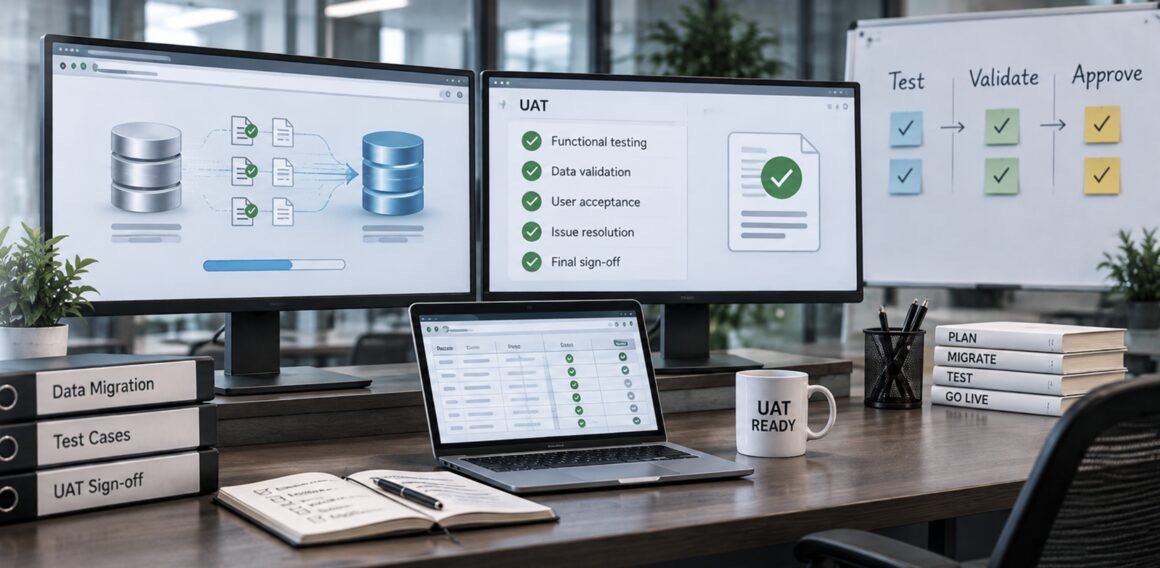
Most enterprise AI pilots work. That is part of the problem.
A pilot usually runs on a clean extract, a handful of friendly users and one system. It answers questions well, drafts the right email, flags the odd invoice. Everyone in the demo room nods. Then someone asks it to run every day against live ERP data with an auditor reading the logs. That is usually when the project quietly stops moving.
Building an AI demonstration is relatively easy. Turning it into a dependable business process is where the real work begins.
The research published this year points at the same gap, although each study measures something different. The 2026 Gartner CIO and Technology Executive Survey, reported in the Gartner Hype Cycle for Agentic AI, found that only 17 percent of organisations had deployed AI agents. More than 60 percent expected to do so within two years. That is a measure of adoption and intent today. Separately, Gartner forecasts that by the end of 2027 40 percent of agentic AI projects will be cancelled because of escalating costs, unclear business value or inadequate risk controls. That is a prediction, not an observed result, but it names the same pressures this article is about.
The Wipro State of Agentic AI 2026 is a directional assessment that combines enterprise assessments, consultant perspectives and public evidence across 72 enterprises and 580 catalogued AI use cases. It found that only 29 percent of organisations have both agent development and governance discipline in place. Only 4 percent publicly demonstrate measurable growth outcomes driven by AI. That means growth they can show in public evidence, not growth they hope for. The McKinsey State of AI survey, published in August 2026, shows a similar split. Eighty percent of respondents reported improved individual productivity. Only 37 percent reported some enterprise EBIT impact from AI, the same as the year before. Around 6 percent qualified as high performers.
None of that says AI does not work. It says the distance between a working pilot and a working process is longer than most plans allow for.
First, be precise about what you are building
Four kinds of system are routinely sold under the same word. Roughly:
- A chatbot holds a conversation and answers questions, usually from a defined body of knowledge.
- A copilot works beside a person inside an application, suggesting a reply, a formula or a journal entry that the person accepts or rejects.
- Workflow automation follows predefined steps and rules. When an invoice matches its purchase order within tolerance, it posts.
- An AI agent is given a goal and works out the steps itself, calling tools across several systems. It might read a supplier email, check stock, draft a purchase order and route it for approval.
In practice these categories overlap, and the label matters less than one question: what is the system allowed to touch? A chatbot connected to a refund tool can issue refunds. A copilot that can submit, not just suggest, is acting for someone. Workflow automation now often includes a model step, such as reading a scanned invoice before the rules apply. Tool access is what turns an assistant into something that changes records, and that is where the controls described below start to matter.
Six places where pilots get stuck
1. The data is not ready, and neither is the context
A pilot is often fed a tidy dataset someone prepared by hand. Production meets the real item master, with duplicate SKUs, retired vendors still marked active and reorder points nobody has reviewed since the last ERP upgrade. An inventory agent that recommends purchases from that data will be confidently wrong.
Context is the harder half. A model can read a policy document, but it does not know which version finance actually follows, or that one warehouse handles returns differently from the others. The Wipro research describes data readiness as the critical bottleneck, trailing infrastructure readiness across industries. Before scaling, someone has to own the data each agent depends on and the documents it is allowed to treat as true.
2. Integration is where the hours go
A pilot reads an export. A production agent has to read from and write to live systems: the ERP, the CRM, the ticketing tool, the bank portal. That means authenticated APIs, rate limits, retries, error handling and a clear answer to what happens when a write fails halfway through.
In an ERP such as NetSuite, this usually means a dedicated integration role, a sandbox for testing and access designed for the job, not a shared login. We covered the NetSuite preparation in more detail in NetSuite AI Agents in 2026. The general point holds for any core system. Integration work frequently costs more than the model work, and it is the part that keeps running long after launch.
3. Security, identity and permissions
An agent is a new kind of user and should be treated like one. It needs its own identity, the narrowest permissions that let it do its job, properly stored credentials and a log of every action. Running an agent under an administrator account because it was quicker in the pilot is one of the most common shortcuts, and one of the most expensive to unwind. The October 2026 Gartner article also predicts that through 2028, more than half of AI initiatives will halt because of unresolved agentic identity challenges.
Where data should not leave your environment, a private LLM deployment runs the model inside infrastructure you control. That removes one category of risk, but it does not make a system secure or compliant on its own. Access control, logging, patching and the usual compliance work still apply.
Retrieval augmented generation, or RAG, lets a model answer from your own approved documents. It does not inherit the permissions of those documents by itself. Access rules have to be enforced deliberately, in how content is indexed and filtered at retrieval time and in the application that presents the answer, so that each user only ever receives material they were already entitled to see.
4. Governance, approvals and accountability
The question that stalls most agent projects is simple. Who is accountable when it gets something wrong?
The practical answer is a tiered set of approvals. An agent might draft purchase orders freely and submit those under an agreed value for automatic approval. Anything above that value or involving a new supplier goes to a named person. Payments, credit notes, changes to customer terms and anything touching payroll should sit behind human approval until the evidence says otherwise. Every action needs an audit trail that someone outside the project could follow.
5. Cost, monitoring and a number you can defend
AI operating costs behave differently from licence fees. They grow with usage, with longer prompts and with retries when something fails. A pilot that cost little with ten users can surprise finance at a thousand.
Three habits help. Measure the baseline before the pilot starts, so the comparison is real. Track cost per completed transaction, not only the monthly bill. And build error detection in from the start: a fixed set of test cases the agent must pass after every change, a weekly sample of live outputs reviewed by a person, and an exceptions queue for anything the agent was unsure about. If mistakes can only be found when a customer complains, the system is not ready.
6. Skills and ownership after go live
A pilot is often built by one enthusiastic team. Production needs someone who will still own it in eighteen months, when a vendor changes an API, a model version is retired or an auditor asks why the agent approved a particular order.
Employer demand for these skills is rising quickly. The Dice October 2026 Tech Jobs Report was released in November and is based on US job postings. It found that AI and machine learning postings grew 91 percent year over year against 20 percent for tech postings overall. Skills it lists with more than 200 percent growth over the year include agentic AI, AI agents, retrieval augmented generation, responsible AI and enterprise integration. Job postings measure what employers are asking for. They are not the same as hires and do not by themselves prove a shortage, but they show where demand is moving.
Eight questions to answer before production
Before an AI use case moves beyond its pilot, it should be able to answer each of these plainly.
| Question | A good answer sounds like |
|---|---|
| Which process goes first? | A high volume task governed by clear rules with a measurable outcome and a low cost of error, such as invoice matching, not supplier selection. |
| Is the data reliable? | A named owner, a recent cleanup and known gaps written down. |
| Can it reach the right systems? | Tested API access in a sandbox, with its own integration role. |
| Who approves sensitive actions? | Named approvers and value thresholds, agreed with finance. |
| How are mistakes caught? | Test cases, weekly sampling and an exceptions queue. |
| How is cost measured? | Cost per transaction against a baseline taken before the pilot. |
| Who maintains it? | A named team with time allocated, not simply the people who built it. |
| What skills are missing? | A list of roles, and a decision on which to hire and which to bring in. |
As a practical screening rule developed for this article, not an industry standard: if two or more answers are vague, the use case is not ready to expand.
If your team is working through these questions for a specific agent, our AI agent development practice covers integration, permissions and approval design for live business systems.
A proposed 30, 60 and 90 day plan
This is a planning framework, not a delivery promise. Real timelines depend on the process, the data and the systems involved.
Days 1 to 30: choose and prepare. Pick one process. Record its current cost, volume and error rate. Audit the data it depends on. Design the identity and permissions for the agent, and agree the approval thresholds with the people who will own them.
Days 31 to 60: run in shadow mode. Connect to the real systems through a sandbox, then let the agent run alongside the existing team. It proposes, people decide. Compare its suggestions with what people actually did, and measure accuracy and cost per transaction.
Days 61 to 90: go live with limits. Allow the agent to act within the agreed thresholds, keep human approval above them, and switch on monitoring and the exceptions queue. Write the runbook and hand ownership to the team that will keep it. Then decide on the evidence whether to expand, adjust or stop.
A hypothetical scenario, for illustration only. A distributor runs an accounts payable agent in shadow mode for a month. It matches most invoices correctly but struggles with one supplier whose invoices arrive as scanned images with handwritten amendments. The team leaves that supplier with people, lets the agent approve matched invoices automatically under an agreed value, and routes everything else for review. The rollout is smaller than the pilot promised, and far more likely to last.
Hire, or bring in specialists?
Enterprise AI needs more than access to a model. Depending on the project, the work may call for:
- AI application engineers and machine learning engineers
- Data engineers and enterprise integration specialists
- Cloud and DevOps engineers
- MLOps or LLMOps specialists
- People who understand AI security and governance
Few organisations need all of those permanently. External specialists tend to make commercial sense when the build phase has a fixed end, when a skill is needed for months rather than years, when a role would take longer to hire than the project will last, or when you want to prove a use case before committing headcount. Ownership should still sit inside the business. The aim is to bring in experience for the build and leave behind a team that can run it.
That is the thinking behind our staff augmentation practice: specialists who join your existing team and work to your process, alongside the enterprise AI and NetSuite work where those skills are applied.
The pilot was the easy part
The organisations getting value from AI in 2026 are rarely the ones with the most impressive demonstrations. They chose a narrow first process and cleaned the data behind it. They gave the agent a proper identity and decided who approves what. They measured cost honestly and named the people who will look after it. None of that is glamorous. All of it is what turns a pilot into a process.
Planning to move enterprise AI from experimentation into production? Speak with TechCloudPro about your AI architecture, integration requirements, implementation roadmap and specialist technology resources.
Sources
Related reading
- Private LLM or OpenAI API in 2026: How We Run the MathWhen does private LLM actually win in 2026? The cost thresholds, the engineering tax most teams forget, and 10 lessons we have learned shipping private LLMs
- How to Deploy a Private LLM on Your Own Infrastructure: Enterprise GuideLearn how to deploy private large language models on your own infrastructure. Covers data sovereignty, GPU requirements, model selection
- Why 87% of Enterprise AI Projects Fail, And How to Be in the 13%Discover the top 5 reasons enterprise AI projects fail and a proven 90-day PoC framework to ensure your AI initiative succeeds. Data-driven analysis.
Talk to our enterprise AI team
If you are weighing a use case like this one, we can help you test it against your own data and systems.
Discuss Your Enterprise AI ProjectAI and automation at TechCloudPro